Source Herbal Whitening Toothpaste for Home, Hotel, and Office
Find 30 herbal whitening toothpaste options from China. Compare OEM/ODM models with features like oral cleaning and eco-friendly packaging. Customize colors, flavors, and logos for home, hotel, and office use with flexible MOQs and delivery terms; compare the available evidence and request quotations based on your requirements.
Key considerations
Products List




Comprehensive Sourcing Guide
Herbal Whitening Toothpaste Sourcing Guide
Sourcing herbal whitening toothpaste requires a strategic balance between natural ingredient integrity and effective cosmetic performance. Buyers must navigate a market where "herbal" implies botanical extracts while "whitening" demands proven abrasive or chemical action. The observed product range indicates a strong emphasis on OEM and ODM capabilities, allowing brands to customize flavors, colors, and packaging to match specific market positioning. This flexibility is critical for differentiating products in a crowded oral care sector, where consumers increasingly seek natural alternatives to synthetic whitening agents.
Procurement teams should prioritize suppliers who demonstrate transparency in their formulation processes. The availability of customized colors and logos suggests a mature manufacturing ecosystem capable of handling complex branding requirements. However, the core challenge lies in verifying that the herbal components do not compromise the stability or efficacy of the whitening function. Buyers need to ensure that the final product meets both aesthetic expectations and functional promises, requiring rigorous sample testing before committing to large-scale production orders.
Product Scope and Observed Listing Signals
The current market landscape for herbal whitening toothpaste is characterized by a wide variety of model numbers and packaging options, reflecting diverse target segments. Observed listings show models ranging from TP015 to TPC013, with weights varying from 90g to 180g, indicating flexibility in product sizing for different consumer preferences. The presence of both paper box and carton packing options suggests that suppliers can accommodate various distribution channels, from eco-conscious retail shelves to bulk wholesale shipments. This variability allows buyers to tailor their inventory to specific regional demands or promotional strategies.
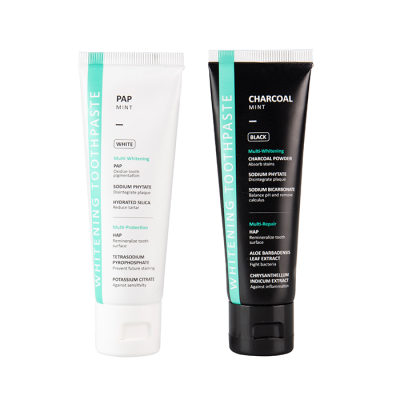
Key features highlighted in the market include oral refreshing properties, basic cleaning functions, and eco-friendly attributes. These signals point to a consumer base that values both immediate sensory benefits and long-term environmental impact. The acceptance of customized flavors, such as mint, and colors like white, yellow, green, or blue, further underscores the importance of sensory appeal in product selection. Buyers should leverage these customization options to create unique value propositions, ensuring that the herbal aspect is clearly communicated through both ingredient lists and marketing materials.
Technical Specifications to Verify
Verifying technical specifications is paramount to ensuring product consistency and performance. Buyers must confirm the exact weight and volume of each unit, as observed standards range from 90g to 133g, with some liquid variants at 112ml. Discrepancies in fill weight can lead to customer dissatisfaction and regulatory issues, so precise calibration checks are essential. Additionally, the composition of the herbal ingredients must be validated to ensure they are stable within the toothpaste matrix and do not separate or degrade over time. This verification process should include stability testing under various temperature and humidity conditions.
Packaging integrity is another critical technical aspect to assess. The use of paper boxes and customized packaging requires careful evaluation to prevent leakage or damage during transit. Buyers should request detailed packaging specifications, including material thickness and seal quality, to ensure product protection. Furthermore, the compatibility of the herbal extracts with the packaging material must be confirmed to avoid chemical interactions that could alter the product's scent, color, or efficacy. Collaborating with suppliers to conduct real-world shipping simulations can provide valuable insights into potential packaging failures.
Compliance and Safety Documentation
Compliance with international safety standards is non-negotiable for herbal whitening toothpaste. Buyers must ensure that suppliers adhere to relevant cosmetic regulations, such as ISO 22716 for Good Manufacturing Practices, which governs the production of cosmetic products. While specific certification statuses may vary, the presence of REACH compliance indicates a commitment to chemical safety and regulatory alignment in key markets. Documentation should include full ingredient disclosures, safety data sheets, and proof of compliance with local and international cosmetic directives.
Safety testing is crucial to verify that herbal ingredients do not cause adverse reactions. Buyers should request results from dermatological and ophthalmological tests to ensure the product is safe for oral use. Additionally, microbial testing must be conducted to confirm that the herbal components do not introduce harmful bacteria or fungi into the formulation. Suppliers should provide comprehensive test reports from accredited laboratories, detailing the safety profile of each ingredient and the final product. This documentation serves as a critical risk mitigation tool, protecting brands from potential liability and reputational damage.
Cost Drivers and Commercial Terms
Cost drivers in herbal whitening toothpaste procurement include the quality and sourcing of herbal ingredients, packaging complexity, and order volume. The observed MOQ of 720 PCS suggests that smaller batches are feasible, but larger orders may yield better unit economics. Buyers should analyze the cost breakdown to understand how ingredient sourcing impacts the final price, as high-quality herbal extracts can be significantly more expensive than synthetic alternatives. Additionally, customized packaging and branding elements can add to the overall cost, so buyers should balance customization with budget constraints.
Commercial terms such as payment methods and delivery times also influence the total cost of ownership. The standard payment term of T/T and a delivery time of 25 workdays are typical, but buyers should negotiate for flexibility based on order size and urgency. Sample services, including free design and samples, can help reduce upfront costs and risk during the selection phase. Buyers should also consider the cost of logistics and import duties, which can vary significantly depending on the origin of the product and the destination market.
Supplier Qualification and Quality Control
Supplier qualification involves a thorough assessment of manufacturing capabilities, quality management systems, and ethical practices. Buyers should verify that suppliers have robust quality control processes in place, including raw material inspection, in-process monitoring, and final product testing. The ability to provide free samples and design services indicates a customer-centric approach, but buyers must also assess the supplier's responsiveness and technical support capabilities. A reliable supplier should be able to provide detailed information about their production lines, equipment, and personnel training.
Quality control extends beyond the initial production run to include ongoing monitoring and continuous improvement. Buyers should establish clear quality benchmarks and conduct regular audits to ensure compliance. The use of customized packaging and branding requires close collaboration with the supplier to maintain consistency across batches. Additionally, buyers should implement a system for tracking and addressing any quality issues that arise post-delivery. Building a strong partnership with a qualified supplier can lead to better product quality, faster problem resolution, and long-term cost savings.
Long-Term Procurement Checks
Long-term procurement success depends on continuous evaluation of supplier performance and market trends. Buyers should regularly review supplier metrics, including on-time delivery, product quality, and responsiveness to issues. The dynamic nature of the herbal toothpaste market requires buyers to stay informed about emerging ingredients, technologies, and consumer preferences. Regular communication with suppliers can help identify new opportunities for product innovation and cost optimization. Buyers should also monitor regulatory changes that may impact product formulation or labeling requirements.
Sustainability and ethical sourcing are increasingly important factors in long-term procurement strategies. Buyers should assess suppliers' efforts to source herbal ingredients responsibly and minimize environmental impact. This includes evaluating the supplier's waste management practices, energy usage, and supply chain transparency. By prioritizing sustainable practices, buyers can enhance their brand reputation and meet the growing demand for eco-friendly products. Long-term partnerships with suppliers who share these values can lead to a more resilient and competitive supply chain.
FAQs
Can I customize the logo and color for herbal whitening toothpaste?
Yes, customized logo and color are acceptable for this product. You can select from white, yellow, green, or blue options, or request a specific custom color. The packaging can also be tailored to your needs, allowing for full branding flexibility on the final product.
What is the minimum order quantity for herbal whitening toothpaste?
The minimum order quantity is 720 pieces for standard orders. However, the observed range extends up to 30,000 pieces depending on the specific model and supplier capacity. Buyers should confirm the exact MOQ for their selected model before placing an order.
How long does it take to deliver herbal whitening toothpaste orders?
The standard delivery time is 25 workdays after order confirmation. This lead time applies to the manufacturing and shipping process for the specified models. Buyers should plan their inventory accordingly to ensure timely arrival at their destination.
Which specifications are available for herbal whitening toothpaste models?
Available specifications include various weights and volumes such as 90g, 100g, 105g, 112ml, and 133g. Different models like TP015 and TPC013 offer these distinct standard sizes. Buyers can choose the specific weight that best fits their market requirements.
What ingredients are used in this herbal whitening toothpaste?
The product contains herbal ingredients designed for oral cleaning and refreshing. It is formulated to provide basic cleaning and whitening effects suitable for home and hotel use. The herbal composition ensures a natural approach to maintaining oral hygiene for adult users.
Can I get free samples before placing a large order?
Yes, free design and free samples are available for potential buyers. The sample preparation time typically takes between 3 to 7 days. This service allows you to evaluate the product quality and customization options before committing to a bulk purchase order.
What payment terms are accepted for herbal whitening toothpaste orders?
The accepted payment term is T/T, which stands for Telegraphic Transfer. This is a standard method for international B2B transactions. Buyers should arrange the transfer according to the agreed schedule with the supplier to ensure smooth processing of their order.